

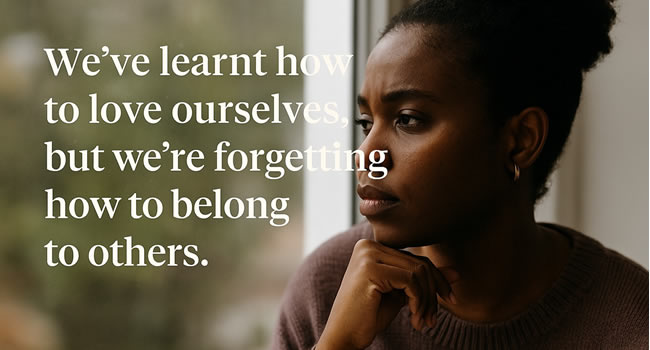
When migration scatters the family tree, and names become blurry echoes.
There was a time when cousins were your first crew.
The ones you fought and gisted with in the same breath.
The ones who ran barefoot with you through sandy compounds, climbed mango trees, and shared sweets your aunty told you to hide.
The ones who danced at your naming ceremonies and shouted your name during “catcher” like their lives depended on it.

They knew the versions of you no one else ever will: the lisping toddler, the child running around with singlet and no slippers, the one who cried at the sight of masquerades.
But now?
They’re strangers you squint at on Instagram.
People you share a last name with, but nothing else.
You pause on their photos.
“Is this not Bisi’s son?”
You call your mum. She confirms it is.
But when she asks, “Have you two spoken lately?”
You don’t know what to say.
It wasn’t one moment… it was a slow fading
No one planned for this.
There wasn’t a big fallout or family meeting where you decided to forget each other. It just… happened.
One family moved abroad. Another shifted to a new city.
One cousin got married. Another got busy.
WhatsApp group chats got muted. Voice notes went unanswered.
And little by little, the ones who were once your partners in nonsense became blurry echoes.
Now when someone says, “Your cousin is getting married,” your first instinct is to ask,
“Which one again?”
What migration stole without asking
We often talk about how migration affects jobs, education, even food.
But what about what it does to family memory?
What happens when there’s no compound anymore just scattered flats, towns, time zones, and missed birthdays?
What happens when there’s no Sunday jollof on the same tray, no one to point out the scar on your chin from that fight over Caprisun in ’99?
You start to forget the texture of your own history.
And it hurts. Quietly.
Like when someone mentions a cousin and you realise you don’t know their child’s name.
Or when you try to teach your own child about family, but realise the tree has no branches you’ve touched in years.
The new loneliness of a connected generation
We are the most connected generation in history.
We text. We tweet. We tag each other in memes.
But we’re relationally starved.
We know how to say “I love you” but we no longer know how to just sit together in silence.
We send birthday messages but skip the call.
We know the language of vulnerability, but not the consistency of community.
Our parents didn’t grow up with emotional vocabulary but they had compound chairs, unfiltered closeness, and unshakeable obligation.
We, on the other hand, can say “I’m processing my inner child wounds” in therapy
But don’t know our cousin’s middle name.
We’ve learnt how to love ourselves. But we’re forgetting how to belong to others.
Is it too late?
No. But it won’t fix itself.
The cousin you used to sleep beside may now live in Denmark with three kids.
The aunty who braided your hair is now a voice note sender.
But it’s not too late to reach for something small.
A DM. A voice note. A “How far?” that actually means it.
Maybe we don’t need grand reconnections.
Maybe all it takes is remembering that history lives in people, not just places.
And the people we’ve forgotten still carry a piece of us.
So no, they’re not just strangers with your surname.
They are memory-keepers.
Laugh-holders.
The only ones who remember when you peed on yourself during Bible recitation.

You may not know their favourite song now.
But once, you shared Milo. And that counts for something.
📣 Do you still know your cousins or are they just names on a muted WhatsApp group?
Share your story using #EgogoCousins.
Let’s remember the people who remember us before it’s too late


Painful reality. Izzy, this is a very good, informative and powerful read. It touched me. Nice one