On Easter Sunday, I took that overcrowded public bus to visit my parents and sat with them at the table. Rice and stew were served. I ate the rice. I left the meat.
“Why didn’t you eat the meat?” they asked.
I answered simply: I avoid meat when I did not prepare or preserve it myself, or when I do not trust where it came from — especially when it is from the open market.

This did not start that day.
I lived, worked and was educated in Germany for nine years. There, before you could touch food for the public, you had to prove you were medically fit. I worked at two restaurants; Vapiano and Panoramic. Meat was handled with care, kept clean, stored cold, and traced from source to plate.
Food safety was not a suggestion. It was a rule. I saw a system where human life came before convenience — and it worked.
Once, I travelled with dried fish from Nigeria to Germany through Paris. It was seized at the airport abroad because it might not be safe. They did not entertain my valid argument that I processed it well. They protected the public first.
Here, we have grown used to something else. We protect businesses and every other consideration first before the human beings or the society impact.
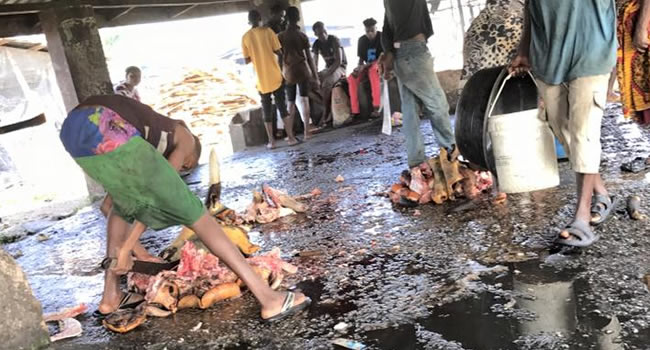
Meat is carried through dirt and waste. It is exposed to flies and dust. It is sold in the open, without control, without cold storage, without questions. We see this anomaly every day, and because we see it every day, we have stopped seeing the anomaly, thinking it’s normal.
I once stood at an abattoir around Ewah Road near Ikpoba Slope in Benin City and saw meat inside a gutter, sharing space with filth and erosion. That day, I quietly stepped back and became a pseudo-vegetarian.
But this is not about my choice. It is about all of us. Unsafe food is not just unpleasant. It is dangerous. It enters homes quietly, weakens bodies, and burdens families who can least afford it. People are not just eating food — they are eating risk, daily, unknowingly.
This is how a problem becomes normal — slowly, quietly, until no one speaks. But it must be spoken. This is a public health emergency.
The Ministry of Health must act — immediately, visibly, and with enforcement that people can see and feel.
Abattoirs must be cleaned and controlled. Food handlers must be tested and certified. Food vendors must wear facemasks and use hand gloves. Meat must be stored properly and sold under refrigeration. Open exposure must end. Standards must begin — even if it starts with the capital city and major city centres and spreads across the state, and the country.

These are not difficult things. They are necessary things. Because many people cannot choose what they eat. They trust what is sold to them. That trust must be protected. A government that protects what its people eat protects their lives.
What we have accepted is not normal. And what is not normal must not continue.
— Saintmoses Eromosele (SME) writing from my Cassava farm in Ewu and Eidenu



Saintmoses Eromosele
Saintmoses Eromosele is a Nigerian scholar, community organiser, and entrepreneur. He is the Executive Director of the Oneghe Sele Foundation and CEO of multiple ventures spanning education, healthcare, property, media, and technology. A trained legal mind with academic grounding in law, sociology, economics, management, and public administration, he is widely known for his advocacy on justice, civic responsibility, and equitable governance. He writes from his cassava farm in Ewu, Edo State.